75% of people wish to maximize their creative abilities and believe they are not living up to their creative potential.
People have different reasons for seeking more creativity. Here’s my list:
They desire the results achieved by implementing creative ideas.
They desire the feeling that occurs when creativity is flowing within them.
They want to believe they’re a creative person because they see that as empowering.
When they feel more creative, they feel more actualized and fulfilled.
Those are good reasons!
When I speak about the topic of creativity (or the related topic of innovation) after the talk, I’m frequently asked “How can I become more creative?”
The short answer and the good news: If you want more creativity in your life, you need to find and use creative tools. Even one tool could make a big difference. You will see short-term positive results. The tools should fit into your context and projects.
This whole discussion presumes you genuinely desire to be more creative. Your brain believes you when you care. The first step is to start thinking you can be more creative. You need to believe that it’s possible. Once you have that in your brain, you must start taking action to make it happen.
It’s easy to change your mindset, you just have to decide. It’s a kind of positive thinking to say to yourself, or outloud, “I am creative.” Your ears need to hear you say it, and your brain needs to receive that message. That’s the first “tool” — belief.
The longer answer and the “bad” news: Becoming more creative is a lifetime quest. It’s not one tool. It takes many tools. Sorting out which ones to use and in what situations is a skill in and of itself. It’s an exciting journey to take on. I highly recommend it! It requires motivation, which can be difficult to sustain. It sometimes requires difficult changes to your thinking habits and beliefs. The tools I keep mentioning require active and consistent hands-on practice. You’ve got to be in it for the long haul. For instance, a tool like the Improv concept of “Yes + AND” used in Improv comedy is easy to describe, but it takes time to build into how you respond. So, the results happen over a more extended period. Trust me, the cumulative results of a long-term effort to be more creative are worth the trouble.
Work An Applied Creativity Personal Plan
Part of the challenge of becoming more creative is sorting out just what to do first, and what to do next. You need your creativity self-improvement program. In this program or plan, you’ll be integrating new tools and behaviors to adopt and use and becoming better at applying them to projects. It’s fascinating work. You’ll be better off if you make a deliberate effort, that is, plan it. Yes, you can learn a lot about creativity randomly. But random things are always going to cross your path. Don’t waste time. Learn as much as possible, implement as you go, and work on an applied creativity plan.
As a career creativity and innovation facilitator, I always search for and try out new tools. I have a virtual binder that is chock full of what I’ve found. I’m working on a book containing a summarized version of the best tools. Stay tuned, there’s some cool and crazy stuff in my manuscript.
Some creativity tools are straightforward, such as using a notebook to log ideas, challenges, and sketches. Notebooks also enable tools like observational research, Mind-Maps, sketching, and doodling.
Some tools are easy to describe but hard to implement. Thinking concepts like keeping an open mind and becoming a better listener (to collaborators, consumers, and clients) is powerful, yet it’s a constant battle to do it well. Learning to listen is a lifelong practice.
Some tools for creativity are easier than others to rationalize or prove. You can measure things like new products and services you introduce. You can even put hard numbers on the revenue they generate. It’s harder to measure the energized thinking in your mind and the good feeling in your heart when you make a practice of walking a meditation labyrinth.
It will take a few days to see the impact of a creative tool on your life. It can take years to see the more profound results of integrating creative tools and practices into your life.
Eight Ways to Beat the Blank Page Syndrome I was talking to a friend recently about what they might do in terms of a creative project. It was a tough conversation, they were stuck, and it got me thinking… Picking out a creative project is a simple concept right? Isn’t it as easy as thinking about what you might like to create and then jumping in? No, it’s not that simple. Why is it complicated? Well, for many of us, full of self-doubt, worry, and fear, embarking on a creative project is emotionally fraught. “What do I want to do?” is an intimidating question because many people simply don’t know. It’s another version of the blank page thing. Beat the
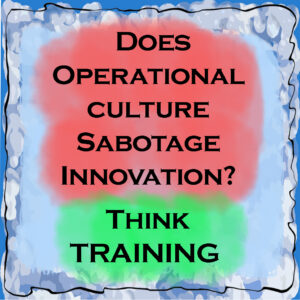
Operations Can Make or Break Growth Projects Enhance Acceptance of New Innovation With Training Innovation teams often do their work away from the day to day action of the company. In bigger organizations they may not even be located in the same office, plant, or even city. Operational employees often don’t even see those fun looking offices with ping pong tables and walls full of white boards. If they do see the ping pong tables — they might resent them. Innovation employees are trained in innovation theory and skills, even if it’s been done informally. They are true believers and do their best to come up with new ideas. Ideas that become projects, that evolve into the new services, products,
Blue Sky Visioning is Under-utilized Improve Personal or Professional Innovation Roadmaps “Be careful what you wish for” is a cliché you hear now and then. It occurs to me that innovation teams, often, don’t wish imaginatively enough. This is also true for individuals seeking new and interesting projects for their lives. If you want to innovate, solve a big problem, or make a positive change in a business or your life — it starts with wildly imaginative wishing. Some term it Visioning. How can you get what you desire if you don’t have an exciting vision for a highly desired outcome? Wildly Imaginative Wishing Take Practice Don’t obey the cliche and wish carefully. Wish With Abandon. This is not as
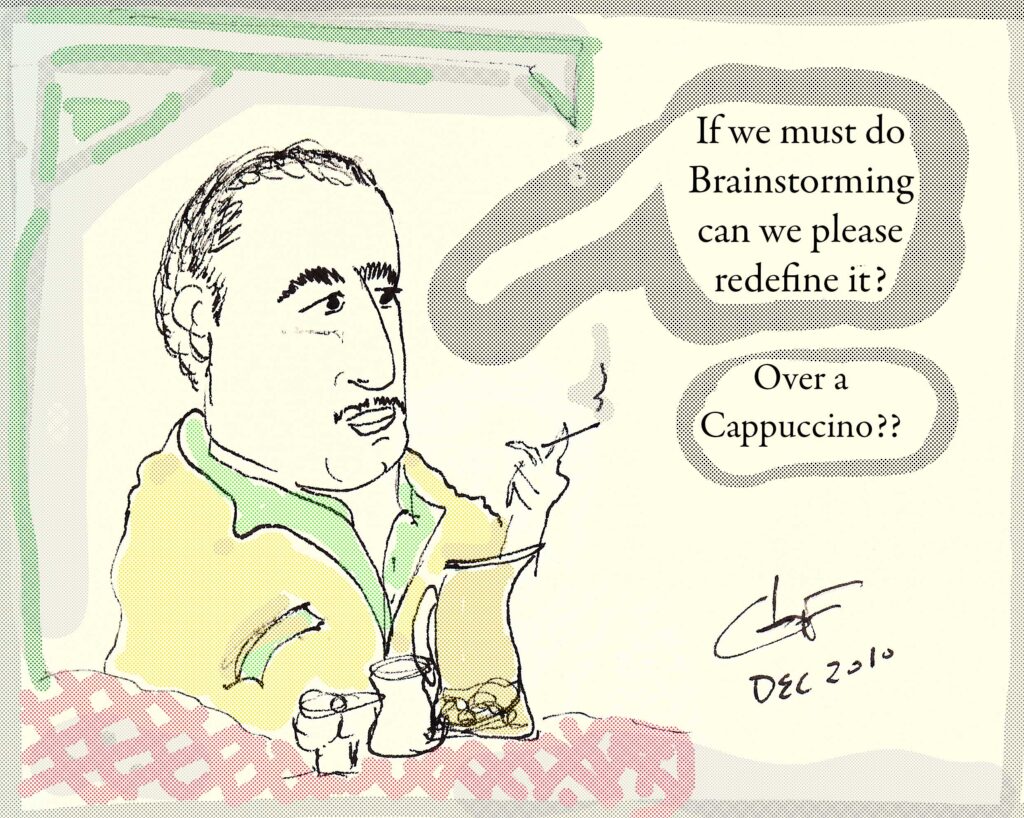
The Sins That Ruin Idea Generation Redefine Brainstorming If You Want Results It’s okay to hate Brainstorming. I’ve heard it called BrainWasting, BullStorming, BullShifting, or words I won’t use here. Perhaps the most damning comment is simply “why did we bother?” Well, you bother because you need ideas. I can get you there, see below. But first… There have been many studies of brainstorming and articles written. Most (but not all) say it’s a waste of time. Many of these studies start with an outdated notion of what brainstorming is, and usually don’t study real working teams. How you define it (and conduct it) makes a difference. As a person whose facilitated over 1,000 sessions I can tell you
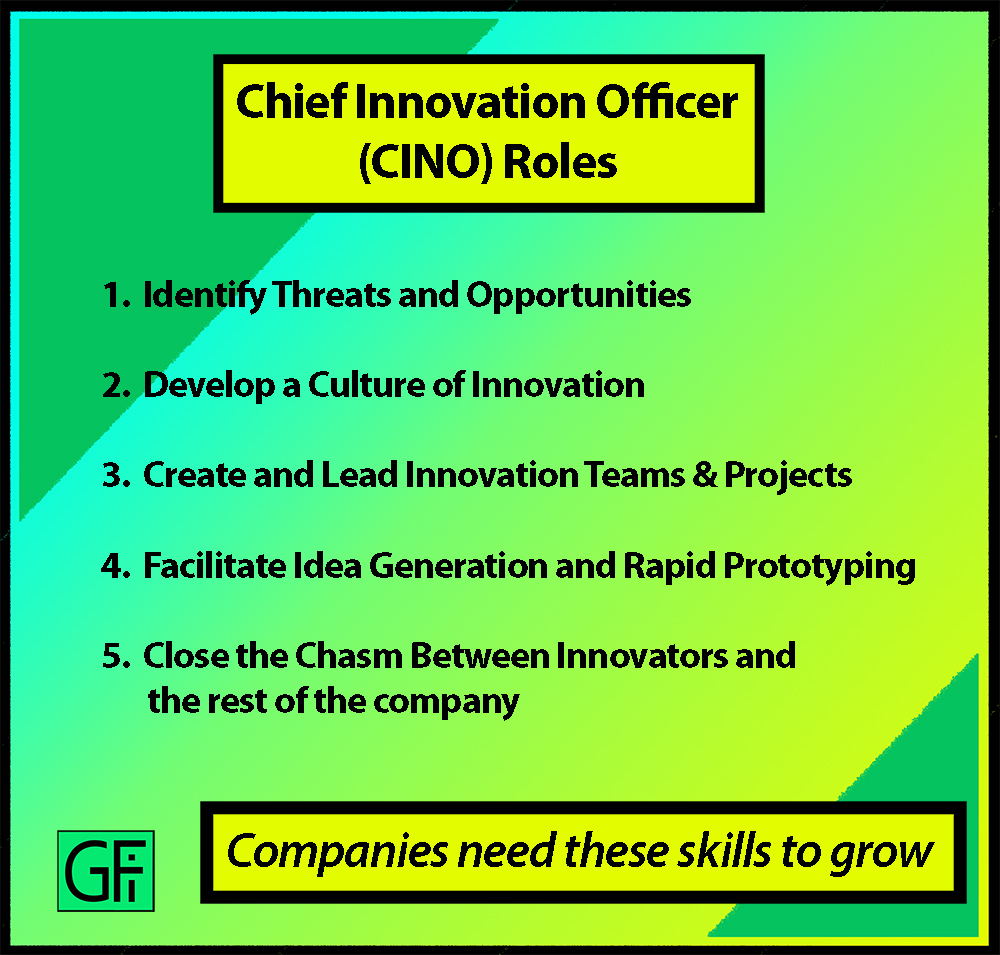
A Practical Solution for Medium Sized Companies to Grow The 80/20 Solution for the MisFortune 10,000 The Fortune 1,000 work innovation process like mad. Many have fine-tuned frameworks with a high level of sophistication. That lowers risk. However, elaborate innovation frameworks slow things down. This mild paralysis is an opening for small and medium sized companies. They can grow by beating bigger players to the punch. But the “MisFortune 10,000” tend to miss this opportunity. Time to consider a Fractional Chief Innovation Officer (CINO) to load up that innovation punch. Here’s why. Speed and momentum matter in innovation, even more so to smaller firms. Leverage the innate agility. The best way to ramp up and grow quickly, beyond having a
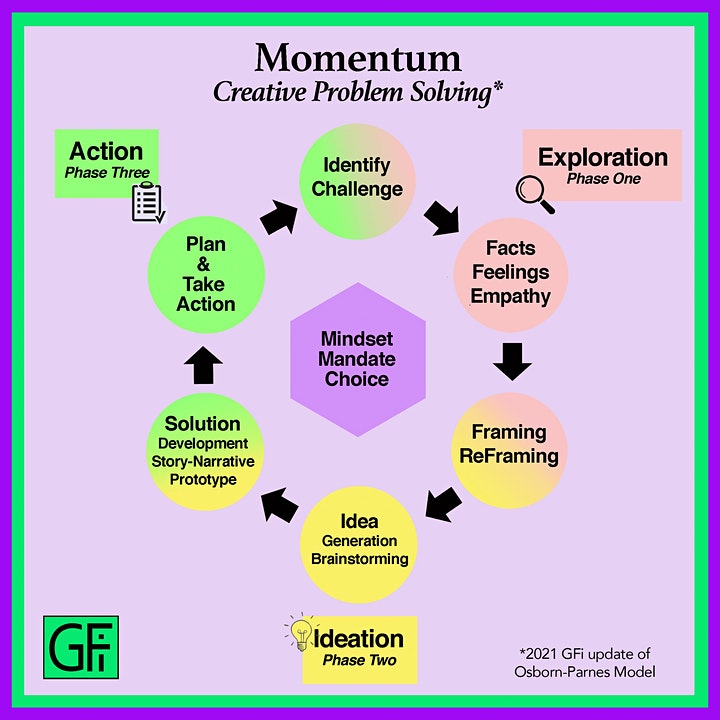
A highly creative new method for solving difficult problems Accelerate the Momentum of Work and Life Projects With Focused Creativity Improvisation works for problem solving AND comedy. MCPS Training Available on Wednesday, April 28th, 1 to 4:30 Eastern Three Oaks, Michigan, Wednesday April 21st, an announcement on International Creativity and Innovation Day Momentum Creative Problem Solving (MCPS) is a powerful new method for solving difficult problems. If you are stuck, fearful or intimidated with a challenge — or delighted with a messy and perplexing opportunity — this is the process to use. More focused creativity means more Momentum MCPS leverages creativity in a dynamic balance with thoughtful analysis. MCPS is a three-phase structured process of exploration, ideas, and action. If
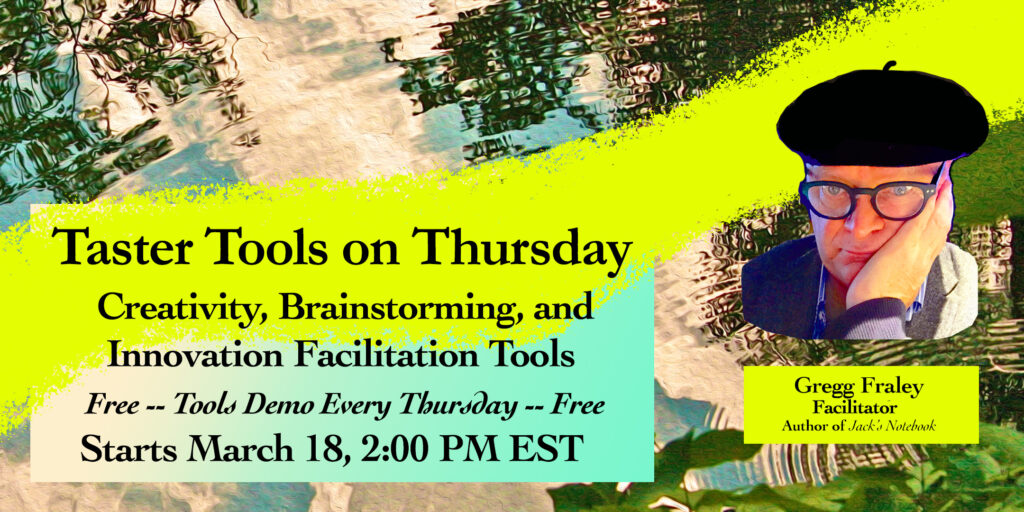
Free Weekly Webinar of Facilitation Tools with Gregg Fraley Every Thursday at 2 pm EST, Master Facilitator Gregg Fraley demonstrates a facilitation tool online. The weekly sessions are FREE. Sessions begin on Thursday March 18th. The 30 minute weekly webinar features demonstrations of various facilitation tools for: strategy, challenge clarification, idea generation (aka brainstorming), problem framing, idea selection, innovation projects, and idea development, etc. Thinking Differently Takes Tools At some point everybody needs to think differently. It might be a really thorny, hairy, awful, complex problem. It might be a juicy opportunity you don’t know how to seize. When you ask your mind to think differently, what happens? Does it come easily? Do new thoughts and ideas spring forth? Or,
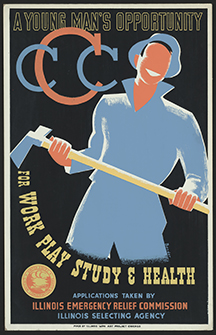
USA, Now An Innovation Loser STEM Skills the Major Culprit Suggests a CCC-ish “American Science Corp” This is my annual blog reporting on the Bloomberg Innovation Index 2021 edition. The USA was 9th last year. Now, the USA has fallen to 11th in the annual ranking of innovation by country. Like last year, the continued slide (we were #1 in 2013) is due mostly to lack of investment in hard science, manufacturing, and technology education. See the Bloomberg Innovation Index report for 2020 here. It’s a truly rich report and it gives a great picture of which countries are primed, and are doing, great things. Is it a perfect measure? No. But it’s a hell of an indicator. The USA
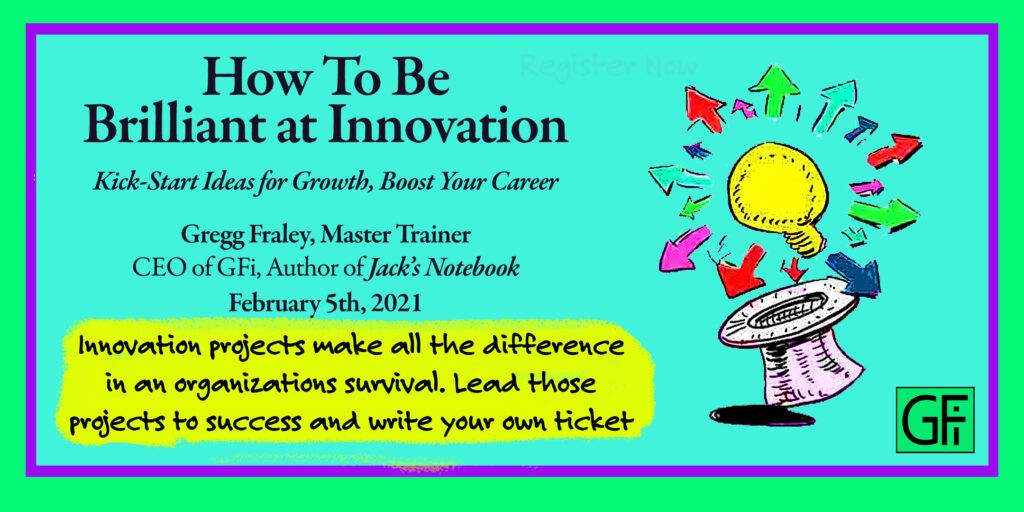
Kick Start Ideas That Lead to Growth Accelerate Your Career Dodge the Pitfalls & Establish an Innovation Cycle Three Hour Virtual Training, February 5th, led by Innovation Master Trainer Gregg Fraley Being Brilliant at Innovation is within your grasp, but, it’s a minefield out there. There are more pitfalls in an innovation initiative than the moon has craters. Getting started is challenging because there is a great deal of conflicting advice in the form of books, consultancies, methods, and anecdotal stories. Does one need to take a Stanford course or read 35 books about innovation to get started? No, but, you do need good training in the fundamentals. In fact, you (and your organization) can be brilliant and effective at